India Smartphone Shipments Drop 23 Percent in Q3 2026 as Memory Costs Surge: How Buyers Can Avoid Overpaying for RAM and Storage
Budget smartphone buyers across India are facing steeper sticker prices this festive season as rising DRAM and NAND flash costs force brands to raise entry-level prices or trim specifications. Industry data released on November 20, 2026 shows India’s smartphone shipments fell between 20 and 23 percent year over year in Q3 CY2026, marking the country’s weakest festive quarter in a decade.
The verdict is clear: while sub-Rs 20,000 phone shipments plunged 47 percent due to component inflation, premium devices priced between Rs 25,000 and Rs 49,000 grew 38 percent as buyers held onto older phones longer and prioritized higher memory tiers. If you plan to buy an Android phone or iPhone in India before 2027, checking real hardware specs instead of virtual RAM labels and timing purchases around bank card cycles will save you thousands of rupees.
1. What Changed in India’s Q3 2026 Smartphone Market
Fresh quarterly tracking from Counterpoint Research, CyberMedia Research, and IDC, reported by Business Standard and FoneArena, highlights three structural shifts reshaping retail phone pricing in India:
- Entry-Level Contraction vs. Premium Growth: Shipments of phones priced below Rs 20,000 dropped 47 percent in Q3 CY2026 as higher memory bills pushed formerly budget models into higher price brackets. Meanwhile, the Rs 25,000 to Rs 49,000 tier expanded 38 percent and the Rs 50,000 to Rs 1,00,000 segment grew 32 percent.
- Domestic Brands and Select Outliers Gain Ground: Counterpoint noted that Indian smartphone brands lifted their combined market share from 2 percent in Q3 CY2025 to 7 percent in Q3 CY2026. Among established makers, CMR recorded 27 percent overall shipment growth for OnePlus, while IDC noted Samsung returned to the top spot with 7.9 percent year over year growth.
- Extended Slump Forecast Through 2027: IDC projects Q4 2026 Indian smartphone shipments to decline by more than 25 percent, with full-year 2026 volumes settling between 125 million and 127 million units, roughly 16 to 18 percent below 2025 levels, and recovery unlikely before 2028.
2. Four Practical Steps to Get Better Hardware Value When Upgrading in India
Because manufacturers are adjusting bill-of-materials costs to absorb pricier memory chips, smart buyers should verify four hardware details before placing an online or offline order:
- Separate physical LPDDR5X RAM from marketing virtual RAM: Many mid-range phones advertise 16GB RAM on retail banners by combining 8GB of physical memory with 8GB of slow flash swap space. Open Settings, tap About phone, and check physical RAM capacity directly; aim for at least 8GB physical LPDDR5 or LPDDR5X RAM so Android 17 and on-device AI tools do not reload background apps constantly.
- Prioritize UFS 3.1 or UFS 4.0 storage over base 128GB UFS 2.2 tiers: As storage chip prices climb, some refreshed 2026 models keep older UFS 2.2 flash in their base variants. Check the detailed storage standard on the brand specification sheet and choose a 256GB UFS 3.1 or UFS 4.0 variant if you record 4K video or keep large offline WhatsApp media archives.
- Audit 5G carrier aggregation and software update commitments: With longer 3-to-4-year replacement cycles becoming standard across Indian households, confirm that your chosen handset guarantees at least three major Android OS upgrades and four years of security patches, alongside support for Jio and Airtel 5G bands n28 and n78.
- Stack instant bank card discounts with official exchange bonuses: Rather than paying launch-week MRP, compare official brand store trade-in valuations against major bank instant discounts during Republic Day or year-end clearance windows, where upper-midrange phones routinely drop by Rs 4,000 to Rs 7,000.
3. Repair vs. Replace: When Holding Your Current Phone Makes More Sense
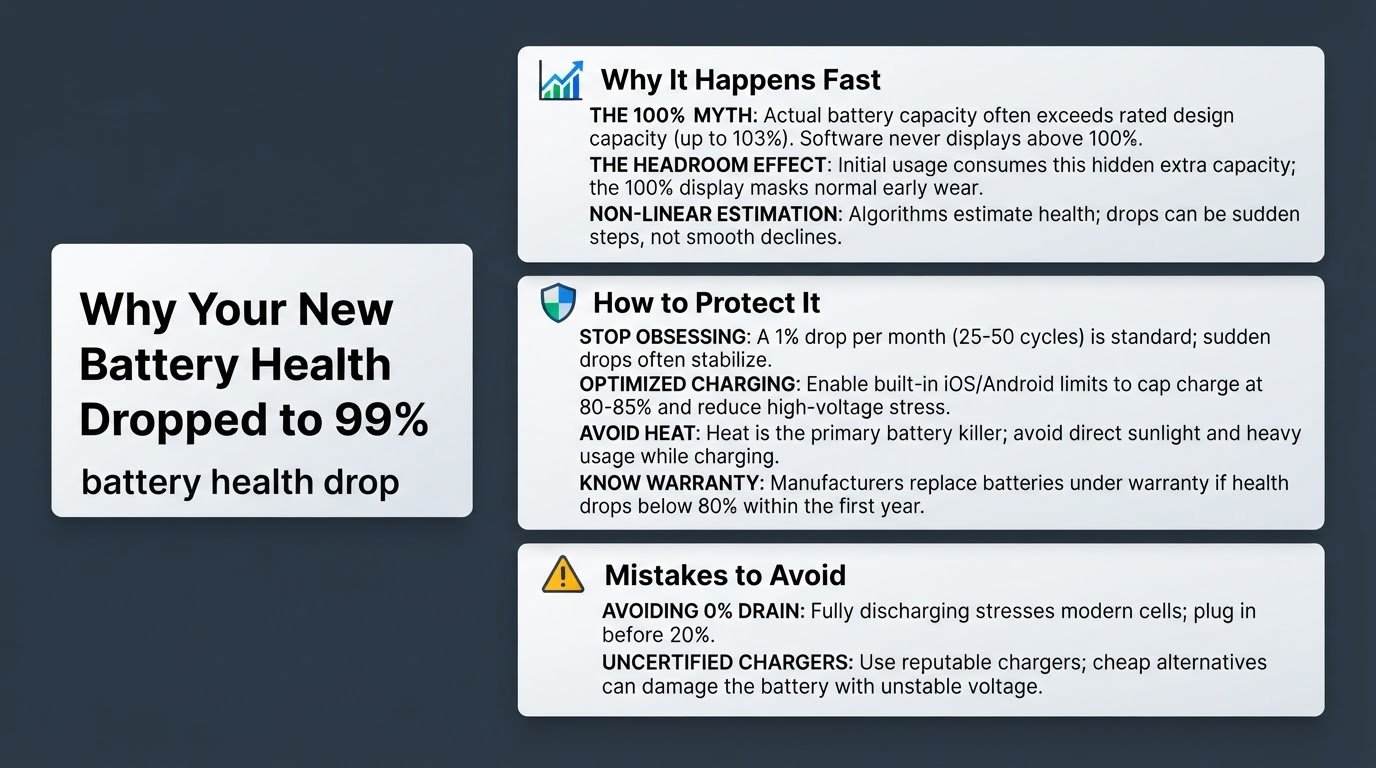
If your current smartphone runs a capable processor from the past two or three years and receives security updates, replacing a degraded lithium-ion battery at an authorized service center in Bengaluru, Mumbai, or Delhi typically costs between Rs 1,800 and Rs 3,500, restoring full-day endurance for a fraction of a new device’s price. Clearing cached app data, disabling background auto-start for unused shopping apps, and offloading photos to external storage can easily extend a phone’s usable life by another 12 to 18 months while component prices stabilize.
At the same time, buyers who rely on banking apps, UPI payments, and corporate email should never hold onto a phone whose security patches stopped more than six months ago. When upgrading becomes necessary, comparing verified hardware tiers and local warranty terms directly on official portals such as Xiaomi India or Samsung India prevents paying premium prices for quietly downgraded memory specs.