Hitachi Systems India and CrowdStrike Open Bengaluru AI Security Centre: How Enterprises Can Implement Agent Kill Switches and Runtime Guardrails
Autonomous AI agents are moving from developer laptops into production banking, healthcare, and customer support workflows across India, creating an urgent governance gap when an agent queries unauthorized databases or loops through costly API calls. On November 18 and 19, 2026, Hitachi Systems India and US cybersecurity vendor CrowdStrike addressed that exact risk by inaugurating an Advanced Global Delivery Centre in Bengaluru dedicated to AI Detection and Response (AIDR) and frontier model vulnerability management across India, Asia Pacific, and the Middle East.
The practical takeaway for engineering and security leaders in India is immediate: you cannot govern autonomous AI agents with traditional perimeter firewalls or static prompt instructions alone. Deploying CrowdStrike’s Falcon Guardian alongside Project QuiltWorks highlights a concrete operational standard that any engineering team can adopt today: pair runtime identity monitoring with an instant kill switch that revokes agent credentials the moment behavior drifts outside policy.
1. What Changed in Hitachi Systems India and CrowdStrike’s Bengaluru Launch
Backed by Hitachi Systems India’s workforce of over 2,800 specialists serving more than 1,000 domestic enterprises, the new Bengaluru delivery centre combines managed security operations with CrowdStrike’s AI-native platform. Details published by Dataquest India and VARINDIA outline three core pillars of the rollout:
- AI Detection and Response with an Agent Kill Switch: Through CrowdStrike Falcon Guardian, security teams monitor AI agents across endpoints, cloud workloads, and identity control points. When an agent attempts unauthorized data extraction or invokes unapproved tools, administrators can trigger an AI Kill Switch to halt the session immediately.
- Project QuiltWorks Frontier Risk Testing: Hitachi Systems India joined CrowdStrike’s Project QuiltWorks alliance, which brings together models from OpenAI, Anthropic, and NVIDIA Nemotron with AWS cloud telemetry to uncover jailbreaks, prompt injection flaws, and model supply-chain weaknesses before production deployment.
- FAIRR Assessments and Next-Gen SIEM: Using CrowdStrike’s Frontier AI Readiness and Resilience (FAIRR) service and Falcon Next-Gen SIEM, the Bengaluru team provides automated vulnerability scanning and remediation across regulated Indian sectors including banking, financial services, and healthcare.
2. Four Practical Steps to Build Runtime Guardrails and an Agent Kill Switch
Whether your organization uses managed SOC services or runs internal AI workflows in Bengaluru, Hyderabad, or Mumbai, apply these four concrete controls to keep production agents contained:
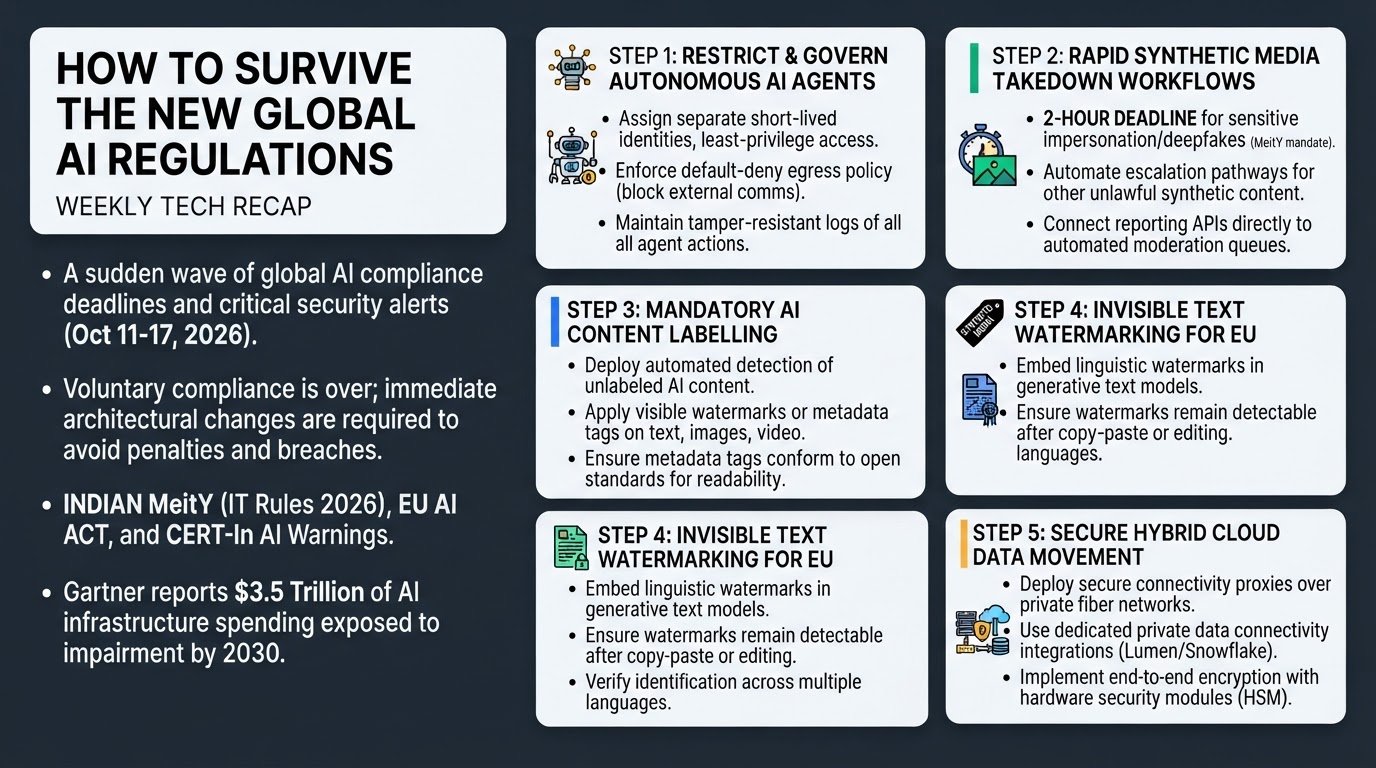
- Assign unique, short-lived machine identities to every AI agent: Never let an autonomous agent inherit a developer’s personal API token or broad service account. Issue each agent workflow its own scoped OAuth client or temporary STS session token valid for 15 to 60 minutes, restricted strictly to the specific tables, buckets, or endpoints that task requires.
- Build a centralized circuit-breaker flag in Redis or Secrets Manager: Implement a lightweight middleware check before every tool call or external API request made by your agent. Storing a boolean kill-switch key in an in-memory store such as Redis or Cloudflare Workers KV lets on-call engineers freeze a runaway or compromised agent across all worker nodes within milliseconds without redeploying application code.
- Enforce hard network egress allowlists and rate ceilings: Configure outbound firewall rules or container network policies so agent runtimes can communicate only with approved model endpoints and internal APIs. Pair network allowlists with per-minute token and request caps so an infinite reasoning loop cannot exhaust cloud credits or exfiltrate bulk records.
- Log every prompt, tool invocation, and data access event to an immutable audit trail: Capture structured JSON telemetry for every tool call, including input arguments, target resource IDs, latency, and response status, and stream those logs to your SIEM. Automated alerts on sudden spikes in read volume or off-hours database queries catch rogue behavior minutes after onset.
3. Operational Trade-Offs and Governance Friction for Indian Tech Teams
Adding runtime circuit breakers and strict identity scoping introduces real engineering trade-offs that teams should account for during rollout. First, short-lived tokens and step-up approval gates add 50 to 150 milliseconds of policy evaluation overhead per tool call, which is negligible for background data pipelines but noticeable in real-time voice or customer chat assistants. Teams building latency-sensitive customer bots should cache validated policy decisions for the duration of a single authenticated session rather than querying external policy engines on every token.
Second, overly aggressive automated kill switches can interrupt legitimate batch jobs when an agent encounters an unfamiliar edge case or retries a transient API timeout. Test new agent policies in shadow alert mode for seven days before enabling automatic session termination, and define a clear recovery runbook so operators can inspect logs, rotate affected secrets, and safely resume workflows. Third, enterprises operating under Reserve Bank of India IT governance norms or Digital Personal Data Protection rules should map every agent identity to a named human owner so compliance audits never encounter orphaned automation accounts. Engineering leaders tracking enterprise AI security standards and advisory frameworks can also review official guidance published by CERT-In.