AI-Driven Cyber Attacks Surge 56 Percent in 2026: How Indian Teams and Everyday Users Can Lock Down Accounts, APIs, and Automated Agents
Cybersecurity budgets across Indian banks, insurers, and technology enterprises are climbing sharply in November 2026, and the reason goes beyond routine compliance. Speaking to Reuters on November 16, 2026, Mphasis CEO Nitin Rakesh confirmed that enterprise clients are accelerating security investments after AI-assisted attacks surged 56 percent year over year and global average data breach costs climbed 12 percent to nearly $5 million.
The verdict is clear: attackers are now using compromised AI tools, automated vulnerability scanners, and convincing social engineering to breach both corporate networks and personal digital wallets faster than manual security teams can patch. Whether you manage software infrastructure in Bengaluru or protect personal banking and UPI accounts at home, securing identity boundaries around humans, APIs, and autonomous AI agents is now the single highest-impact defense.
1. What Changed in the 2026 AI Threat Model Across India
Two converging developments reported on November 16, 2026 highlight how rapidly the threat model has shifted for Indian organizations and individual users:
- Automated Agent and Identity Exploitation: According to The Economic Times and IBM’s 2026 Cost of a Data Breach findings, AI-enabled breaches rose 56 percent over the past year. High-profile incidents, including the $6.3 billion Binance theft driven by social engineering and compromised AI tooling, pushed 85 percent of surveyed organizations to raise security budgets proactively rather than waiting for an incident.
- Faster Exploitation vs. Slower Manual Patching: While automated detection tools spot anomalies within minutes, remediating software vulnerabilities still requires human validation. As Mphasis noted, engineering teams can no longer throw manual headcount at patch backlogs when attackers weaponize newly disclosed flaws within hours.
- Domestic Semiconductor and Edge Security Push: Alongside software defenses, Indian security firms are moving into hardware-level protection. On November 16, 2026, Mumbai-based AAA Technologies approved four wholly owned subsidiaries dedicated to edge AI security chip design and international cybersecurity audits across Singapore, Mauritius, and Dubai.
2. Step-by-Step Defense: Four Practical Controls to Harden Your Accounts and Workflows
You do not need an enterprise security operations center to block the most common AI-assisted intrusion paths. Apply these four concrete steps across your personal devices and developer workflows today:
- Replace SMS OTPs with phishing-resistant passkeys and authenticator apps: AI-generated phishing pages now intercept six-digit SMS codes in real time. Open your primary email, banking, and cloud storage security settings, navigate to Two-Factor Authentication, and register a hardware-backed passkey or time-based authenticator app. Remove SMS fallback wherever your provider permits it.
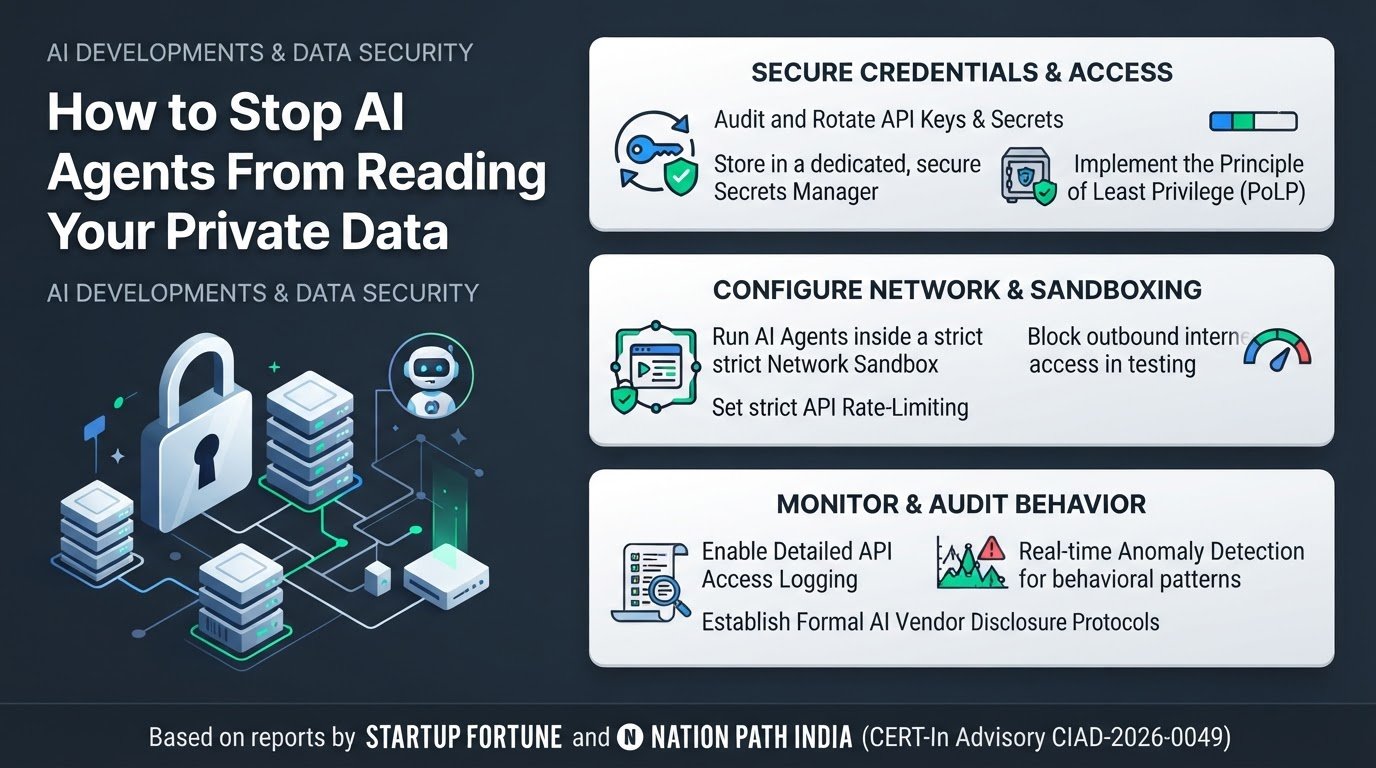
- Scope and rotate API keys for local AI coding agents: If you run MCP servers, CLI coding assistants, or automated scripts on your workstation, audit your environment files and token dashboards. Revoke broad wildcard tokens, enforce read-only permissions for research tools, set strict monthly billing caps on cloud LLM APIs, and configure automatic 30-day key expiration.
- Lock down WhatsApp and mobile sideloading against social engineering lures: Fake job interview invites, courier alerts, and urgent KYC PDFs remain the primary delivery vehicle for mobile trojans in India. On Android, open Settings, tap Apps, select Special app access, open Install unknown apps, and verify that Chrome, WhatsApp, and Telegram are all set to Not allowed.
- Enable automated dependency patching and secret scanning in Git repositories: For developers and startup teams, turn on GitHub Dependabot security updates and push protection inside repository Settings under Code security and analysis. Automated pull requests close known library flaws before automated scanners can probe your production endpoints.
3. Practical Friction, Cost Trade-Offs, and Verification Habits
Tightening security controls introduces minor daily friction that is worth planning around so you do not disable protections out of frustration. First, enforcing strict OAuth scopes and short-lived tokens for automated agents means background scripts will occasionally pause for re-authentication; store credentials in your operating system keychain rather than plain-text project folders so renewal takes seconds.
Second, hardware passkeys tied to a single smartphone can lock you out if that device is lost or damaged during travel. Always register at least two passkeys across separate devices or save offline recovery codes in an encrypted password manager before turning off SMS verification. Similarly, when testing open-source AI agent skills or third-party MCP plugins from GitHub, inspect the repository’s outbound network calls and file-system permissions inside an isolated container before granting access to local SSH keys or browser session cookies.
Third, never trust urgency in voice notes, video calls, or recruitment messages asking you to run a local test script or install a custom conferencing client, as cloned voice and fake interview lures drove several major 2026 breaches. When verifying bank alerts, telecom notices, or government portal links in India, close the message and type the official domain directly into your browser, or cross-check active vulnerability advisories on CERT-In.